












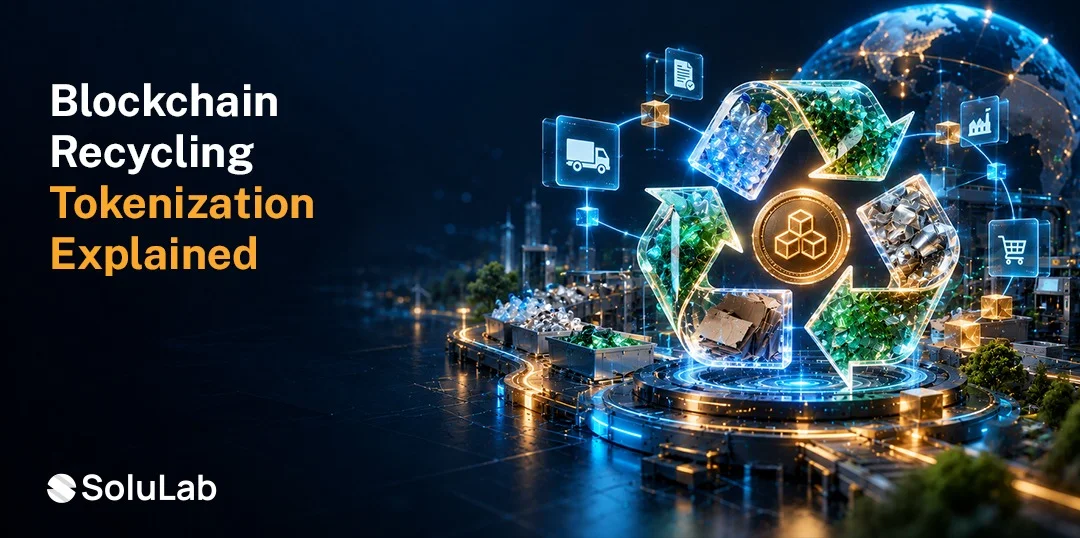
Blockchain Recycling Tokenization: How It Works and Why It Matters
Learn how blockchain recycling tokenization works, from waste tracking to digital assets, and how it can improve transparency across recycling networks.
A blockchain game development company builds games where ownership, assets, and rewards are recorded on-chain, giving players real control over in-game items instead of a publisher-controlled database. SoluLab builds these games for studios and founders across Ethereum, Solana, Polygon, and other networks, from game economy design through engine development and launch.
Services provides you the technology to develop fluid experience games. By just utilizing our blockchain game development services, you can create games based on blockchain technology.
Your games can exchange money, shares, or property for unlocking intriguing gaming characters. Achieve the impossible on Ethereum through smart contracts.
Create ultra-fast and secure dApp games using the EOS platform. Smart contracts fuel EOS dApp games, paving the road for the best-decentralized gaming system.
We provide various fantasy sports game production services using cutting-edge technology. We focus on the needs of our users.
Blockchain offers a safe and secure environment for game developers and entrepreneurs, and digital assets may make in-game purchases quicker, so no more waiting!
Delivering easy-to-use, transparent, and feature-rich NFT marketplaces facilitating the buying, selling, biding and minting of multi-chain compatible NFTs.
Use safe and reliable asset management projects to get the most out of your in-game assets. Stay away from hacking.
Players that continue playing persuasive games developed by us will be rewarded with various rewards, which will help them reach their real-world objectives!
A payment gateway developed by us will provide gamers with complete payment onboarding. Gamers may enjoy the most significant and most secure online gaming experience.
Explore more power and scalability with migration, end-to-end code reconfiguration, and by integration of efficient blockchain resources into your game.
A blockchain game lives or dies on its economy, not just its graphics. Poorly designed token sinks and faucets inflate supply until in-game rewards become worthless; well-designed ones keep players earning something that holds value. We design the token economy alongside the game itself, not as an afterthought bolted on before launch:
Defining what players actually do with earned tokens: spend, stake, govern, or trade, so the token has a real reason to exist beyond speculation.
Tuning earn rates against sinks (upgrades, entry fees, cosmetics) so the economy stays stable as the player base grows.
Structuring reward systems that reward genuine engagement without creating bot-farming incentives that wreck the economy within weeks of launch.
Blockchain games give players full control over the digital assets they earn or receive through their participation in games, and to use these assets you have to get stable and efficient network support.
Most well known network for digital asset transactions and smart contract validation
Most well known and easy to use network named Binance Smart Chain
Easy interoperable network reducing network fees
Efficient in handling thousands of transactions with proof-of-history (POH) system
A highly secure and scalable with proof-of-stake (POS) timestamping
Helps in high-speed transaction with zero transaction fees
Blazing fast transaction featured with the consensus protocol
Lightning fast transactions and negligible network fees
Simple, secure and sustainable which uses the multi-chain network to work
Transparent and interoperable for high productivity
Highly secure and scalable layer 2 network
Top encryption with isolated networking
Capable of perfect and precise geolocating
Used for tokenization and digitisation
Highly competent and scalable platform for web 3.0
Stable, fast and inexpensive transaction network
A blockchain layer means nothing if the game underneath isn't fun to play. Our game development process starts with gameplay systems and game mechanics — core loop, progression, player retention, before blockchain integration ever enters the conversation.
We develop in Unity and Unreal Engine, selecting the engine based on your platform targets (mobile, PC, console, or WebGL) and the visual fidelity your game needs—the same engine foundation behind our ALPHAVERSE metaverse build, extended across new projects.
Every smart contract powering in-game assets, rewards, or marketplace transactions goes through an independent security audit before launch. Game economies are a frequent exploit target; unaudited reward or minting logic is how real games have lost real player funds. Audit readiness isn't optional on anything touching tokens or NFTs.
Blockchain game development companies show massive growth rates in the past few years, by developing top-notch games with smooth and fluid experiences. As a Blockchain game development company, we helped many of our clients to stand alone in the marketplace.
SIE is a comprehensive platform built on Blockchain technology, including social networking, eCommerce, and a game platform. We employed blockchain technology to improve the efficiency of the incentive system on the SIE platform. We have also established an ICO token for SIE. We were able to keep records immutable.
Read More
The AnRKey protocol is a decentralized finance social gaming economy that entitles users to develop, use, monetize, and exchange games and NFT assets on layer 2 Ethereum. The team at SoluLab created the DeFi protocol that allows digital value exchange where users work together to develop and expand value per their individualized contributions.
Read More
AlphaVerse is a blended Metaverse model with several different universes where users can play, create and earn. SoluLab built this Metaverse using Unity, which continuously exists on a blockchain using the Binance Smart Chain. Every asset in this Metaverse is a non-fungible token on which users can purchase, rent, build, or host events.
Read More
$15,000 – $35,000
6–10 weeks
$40,000 – $90,000
3–5 months
$90,000 – $200,000+
5–9 months
$200,000+
8+ months
Discovery Workshop
Strategy and Solution Design
Development
Testing and QA
Launch and Maintenance
Support and Customer Service
Discovery Workshop
Strategy and Solution Design
Development
Testing and QA
Launch and Maintenance
Support and Customer Service
The efficiency with which our development team works at SoluLab calls for work experience with them. Hire blockchain game developer today to get work experience like never before.
A blockchain game development company builds games where asset ownership, rewards, and transactions are recorded on a blockchain, giving players verifiable, tradeable ownership of in-game items instead of a publisher-controlled database. This covers both the game itself and the underlying smart contract and token infrastructure.
We build on Ethereum, Solana, Polygon, Binance Smart Chain, Avalanche, and other major networks, selecting the right chain based on your transaction volume, fee sensitivity, and target player base rather than defaulting to one network for every project.
We develop primarily in Unity and Unreal Engine, chosen based on your target platforms (mobile, PC, console, or WebGL) and the visual fidelity your game requires.
We design token utility, reward balancing, and earn/spend mechanics alongside core gameplay, not after it, tuning sinks and faucets so the economy stays stable as your player base scales, and avoiding reward structures that invite bot farming.
Yes. Every smart contract touching tokens, NFTs, or marketplace transactions goes through an independent security audit before launch. In-game economies are a frequent exploit target, and unaudited minting or reward logic is one of the most common ways blockchain games lose real player funds.
Cost depends on scope: NFT integration into an existing game typically runs $15,000–35,000, a full play-to-earn game runs $40,000–90,000, and a large-scale blockchain game or metaverse project can exceed $200,000. See our pricing table above for a full breakdown by project type.
Timelines range from 6–10 weeks for NFT integration into an existing game to 8+ months for a full metaverse-scale build. We provide a fixed-price, scoped timeline after an initial requirements discussion.
Yes. Our Game Integration Service covers migrating existing games to add blockchain functionality — wallet connectivity, NFT asset ownership, and token rewards — without requiring a full rebuild.
Yes. We build NFT marketplaces supporting minting, trading, and bidding on multi-chain compatible in-game assets, so players can buy, sell, and trade what they earn.
Many companies offer general blockchain app development services, but far fewer combine that with actual game design expertise — core loop, progression, and engine development, not just token plumbing. SoluLab builds both sides: the game itself in Unity or Unreal, and the blockchain layer underneath it.
Learn how blockchain recycling tokenization works, from waste tracking to digital assets, and how it can improve transparency across recycling networks.

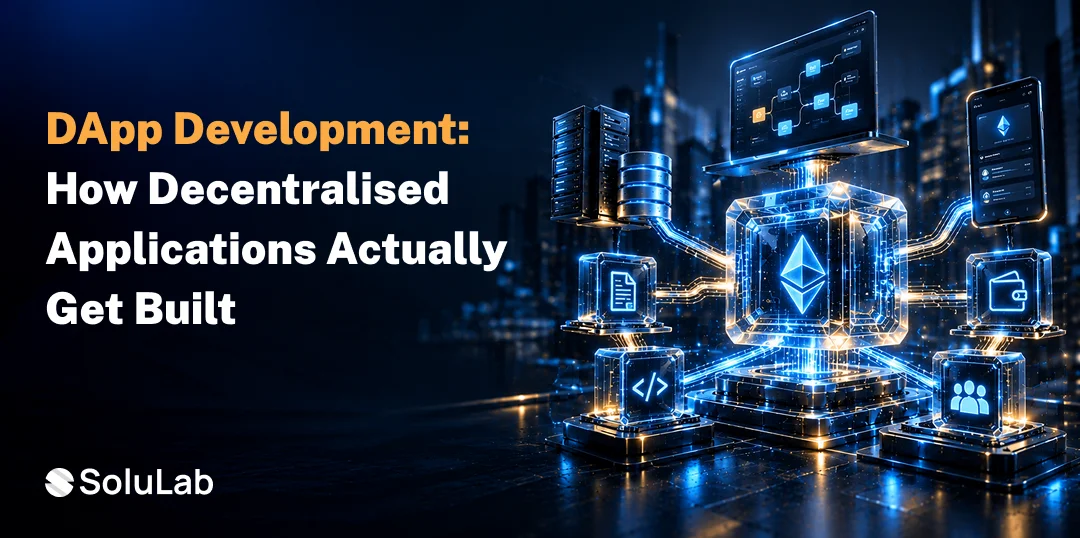
dApp development means building an app whose core logic runs as smart contracts on a blockchain. This guide covers what makes an…
Discover how to verify a blockchain development company's expertise, technical abilities, security practices, case studies, and client track record.