














































DeFi Fee Structures Explained: Protocol, LP, and Gas Fees
Learn how DeFi fee structures work, including protocol, liquidity provider, and gas fees, with insights into costs, calculations, and their impact on…
Decentralized finance (DeFi) development services cover the design, smart contract engineering, security testing, and launch of financial protocols that run without intermediaries: lending markets, DEXs, staking systems, and wallets. SoluLab builds them for founders, fintechs, and financial institutions. Share your idea for a scoped cost estimate and architecture review.
SoluLab covers the full DeFi stack, from protocol design through mainnet and monitoring. Each service below links to the dedicated team and process behind it.
We design the collateral logic, interest-rate curves, and liquidation engines that decide whether your market survives a fast drawdown or accrues bad debt. Oracle staleness checks, partial liquidations and health-factor buffers are part of the architecture, not an afterthought.
Staking is an incentive problem before it is an engineering problem. We model emissions, lock-up curves and reward decay so liquidity stays through the first epoch instead of rotating to the next protocol offering a higher headline APY.
From constant-product AMMs to concentrated liquidity and on-chain order books, we build venues that stay predictable when volume swings. Routing, fee tiers, slippage protection and MEV mitigation are designed together rather than patched in sequence.
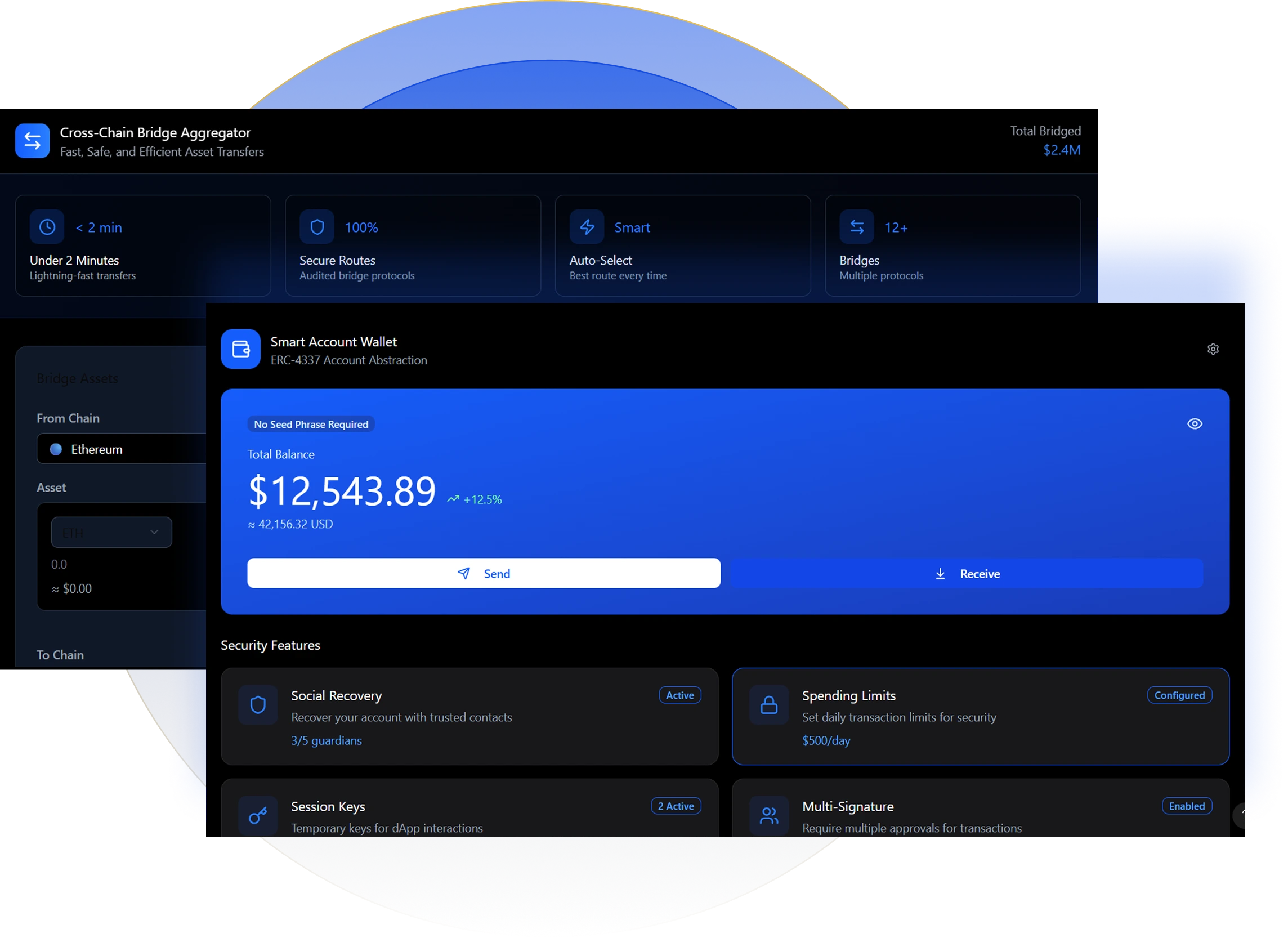
Non-custodial multi-chain wallets with social recovery, embedded-wallet onboarding and transaction simulation, so users who have never opened Etherscan can still tell what they are about to sign.
Supply, emissions, vesting and governance rights designed as one system. We stress-test the schedule against a bear case before a single token is minted, because token design is the hardest thing to change after launch.
Fiat-backed and asset-backed issuance with minting and redemption flows, reserve reconciliation, proof-of-reserve integration, and the reporting regulators expect to see.
Proposal, voting, delegation, and treasury execution built so participants can follow what is happening. Timelocks, quorum design, and execution guards are included by default.
Frontend, backend, indexing, and contracts built in sync. Subgraphs and event pipelines are specified alongside the contracts, so your analytics are not reverse-engineered after launch.
Solidity built on OpenZeppelin base contracts with Foundry invariant suites, fuzzing, and static analysis on every pull request. We prepare the codebase, documentation, and test coverage an external auditor needs before the audit starts.
Each protocol type moves crypto assets in a different way, and each fails in a different way. These are the categories we build most, with the design decision that matters most in each.
Over-collateralized money markets where users deposit crypto assets to earn interest or borrow against them.
AMMs, concentrated liquidity pools, and on-chain order books that replace a centralized cryptocurrency exchange's matching engine.
On-chain futures and options with margin and funding-rate logic.
Fiat-backed, crypto-collateralized, or hybrid designs with minting, redemption, and reserve reporting.
Strategies that route deposits across protocols for the best risk-adjusted return.
Staking that issues a tradable receipt token, so capital stays usable while it earns.
Tokenized loans, invoices, and treasuries with permissioned access for financial institutions.
IDO and token-sale platforms with vesting, whitelists, and investor caps.
Messaging and settlement between chains for transfers and payments.
The global decentralized finance market is estimated at USD 37.3 billion in 2026 and projected to reach USD 1,417.7 billion by 2033, a 68.2% CAGR, according to Grand View Research. On-chain, the picture is more sober than the forecast suggests, and that gap is worth understanding before you commit to a launch date.
A market that has just lost a third of its liquidity and USD 942 million to exploits is not a market that rewards a rushed mainnet. Capital is consolidating toward protocols that can demonstrate their collateral logic and liquidation paths hold under stress. If you are raising or courting institutional liquidity in 2026, the security story is the commercial story.
TVL across all chains fell 37% in the first half of 2026 while daily DEX volume held above $7 billion. Capital is consolidating into protocols that work rather than protocols that launched. Build for the second group.
Book a DeFi Strategy CallEvery capability below buys you a specific outcome once real money arrives. These are the layers we design first, in roughly this order of consequence.
The smart contract layer is where DeFi financial transactions settle, and where nearly every loss starts. Our DeFi development solutions treat contracts as the product, not a component.
Contracts extend audited OpenZeppelin libraries rather than reinventing token, access-control, or math logic.
Before writing a function, we write down what must always be true (for example, "total borrowed never exceeds total supplied"), then encode those as Foundry invariant tests.
Proxy patterns only where needed, behind a multisig and a timelock, so a fix can ship fast but never silently.
Storage layouts, batching, and slippage checks designed in, because users pay for inefficiency on every transaction.
Solidity for Ethereum and EVM Layer 2s; Rust with Anchor for Solana programs.
NatSpec documentation, a threat model, and full test coverage packaged for the external auditor before the audit window opens.
A DeFi protocol is only as reliable as the systems it reads from and writes to. These are the integrations we plan and test alongside the contracts:
Chainlink, Pyth, Redstone, or API3, with staleness and deviation checks on every read.
MetaMask, WalletConnect, Coinbase Wallet, embedded and smart-contract wallets (ERC-4337) for users new to crypto assets.
LayerZero, Wormhole, Axelar, or Chainlink CCIP, chosen by trust model, not popularity.
DEX aggregators such as 1inch and 0x, plus liquidity bootstrapping with market makers.
Card and bank-transfer ramps so users can enter and exit without a centralized cryptocurrency exchange.
Wallet screening, KYC gating, and transaction monitoring for permissioned pools serving financial institutions.
Subgraphs and event pipelines for dashboards, plus treasury management reporting.
On-chain monitors that flag liquidations, oracle drift, or unusual flows in real time.
We would rather you go in knowing the last column. It is also the column that drives most of our architecture decisions.
Two protocols that show what our DeFi development services look like once real capital arrives. Both run on Ethereum, both went through independent audits before mainnet, and both are still live. The numbers below are the client's own reported figures.
DLCC needed to move users off traditional finance into automated crypto trading, lending and borrowing, without the custody complexity or geographic restrictions that make DeFi intimidating for newcomers. We built the multi-custody onboarding, the real-time collateral marking system, and the trading interface on top of it.
A DeFi startup was losing users to high gas fees, confusing chain-switching and failed transactions from insufficient gas. We built a multi-chain DEX using ERC-4337 account abstraction and meta-transactions, so users trade across five chains without holding a native gas token on any of them.
Build a DeFi platform engineered for real users, real liquidity, and real-world scale, with smart contracts, multi-chain infrastructure, and security baked in from day one.
Lending and savings products with on-chain settlement and programmable yield.
Permissioned DeFi pilots with KYC gating, address screening and full audit trails.
DEXs, order-book venues and perpetuals with institutional reporting.
Yield aggregation, strategy vaults and multi-chain portfolio reporting.
Fractional ownership with automated on-chain distributions.
Stablecoin settlement and cross-border rails.
Token economies, staking and in-game asset markets that hold value outside the game.
Full protocol builds from tokenomics through to mainnet and governance.
DeFi development costs from about $15,000 for a basic single-chain build to $50,000 or more for an advanced multi-chain platform. Exchanges cost more than lending or staking platforms because of their liquidity and routing logic. Here are SoluLab's starting prices by product:
$25,000
$15,000
$20,000
$50,000+
$30,000
$20,000
$25,000
$50,000+
$15,000
$15,000
$20,000
$30,000+
$10,000
$10,000
$15,000
$25,000+
Fastest
6 to 10 weeks
10 to 14 weeks (single chain)
16 to 24 weeks (multi-chain or institutional)
Every DeFi protocol earns through fees, and the fee model should be settled before the contracts are written because it shapes the architecture. These are the mechanisms we help teams design and the rate ranges commonly seen across major protocols. For a deeper breakdown, see our guide to DeFi fee structures.
We build DeFi platforms alongside teams who understand protocol design, liquidity mechanics, and real on-chain risk, so you move from idea to mainnet without getting stuck in broken testnets, rushed fixes, or fragile integrations and connect early to the chains, liquidity sources, and tooling that matter, while others are still experimenting in isolation.
Infrastructure proven in live on-chain environments, chosen for what holds up under transaction volume and adversarial pressure. We pick chains, oracles, and bridges to match where your liquidity and users already are.
Every DeFi development company says they have a process. Ours is shaped by what usually breaks first in real launches, like liquidity shocks, security exploits, gas spikes, and integrations that behave fine on testnet but fail once users arrive.
We pin down who your users are, what they are depositing, and what has to stay true for them to keep depositing.
Collateral ratios, oracle assumptions, liquidation thresholds and failure modes, modelled before any code exists.
Supply, emissions, vesting and fee capture, stress-tested against a bear case rather than a launch-week case.
Clickable flows for deposit, borrow, swap and exit, tested with people who are not crypto natives.
Solidity contracts with Foundry test suites, invariant tests and static analysis running on every commit.
Oracles, bridges, indexers, wallets and the analytics you will need from day one, not month three.
Fuzzing, mainnet fork testing against live state, manual threat modelling, then handover to an independent external auditor.
Deposit caps, gradual parameter relaxation and guarded upgrade paths rather than an open launch.
Runtime alerting on TVL, liquidations and anomalous flows, plus a documented incident runbook.
Liquidity moves fast, and early protocols capture users, TVL, and mindshare first. We build DeFi platforms that handle real volume from day one, scale across chains, and stay secure as adoption grows.
Book Your RoadmapFounders, DeFi startups, and protocol teams come to us because we actually deliver DeFi platforms that work once real users and liquidity show up. We combine protocol design, smart contract engineering, and security-first architecture so your DeFi platform doesn’t just launch - it survives market swings, liquidity pressure, and on-chain risk.
We model emissions, fee capture and a bear case before the first contract is written, because token design is the hardest thing to change after launch.
Slither, MythX and Foundry invariant tests run on every commit, and every protocol goes to an independent auditor before mainnet.
Lending protocols, DEXs, liquid staking and stablecoin infrastructure are builds we have shipped, with the metrics above to show for it.
Ethereum, Base, Polygon, BNB Chain, Arbitrum, Optimism and Solana, so you are not rebuilding the protocol to reach a new liquidity pool.
CMMI Level 3 and SOC 2 processes, 250+ engineers, and a delivery track record going back to 2014.
Roughly half our early conversations end with a narrower scope than the founder walked in with. That is cheaper for you and more likely to survive contact with the market.
"Most DeFi protocols do not fail because the smart contract was wrong. They fail because the
incentive design assumed liquidity would stay, and it did not. We model the exit before we model the
entry."
Chintan has led SoluLab's blockchain practice since 2014, across lending protocols, exchange
infrastructure, staking systems and tokenized asset platforms.
Founders work with us because we don’t just deliver smart contracts or dashboards. We help them launch DeFi platforms that scale, the core logic stays intact, and teams aren’t scrambling when things get busy.
Decentralized finance development services cover everything needed to launch a DeFi product: protocol and token design, smart contract development, frontend and indexing, integrations with oracles and wallets, security testing, audit preparation, and mainnet launch. Typical builds include lending markets, decentralized exchanges, staking and yield systems, stablecoins, and DeFi wallets.
A DeFi development company designs the protocol economics, writes and tests the smart contracts, builds the frontend and indexing layer, and deploys to mainnet. The work spans lending markets, DEXs, staking systems, wallets, and governance. The contract layer is where most of the risk sits, so security work runs through every stage.
Look for shipped DeFi protocols with published results, not just generic blockchain work. Ask how they model protocol economics, which testing they run (invariant tests, fuzzing, fork testing), and how they prepare for an external audit. Check that they have built on your target chain and will share a threat model before you sign.
SoluLab's DeFi platforms start at about $15,000 for a basic build, $20,000 for an MVP, and $50,000 or more for an advanced multi-chain platform. Decentralized exchanges start at about $20,000. An independent smart contract audit is separate and typically adds $15,000 to $60,000, depending on contract complexity.
A single-chain DeFi MVP takes 10 to 14 weeks from kickoff to a guarded mainnet launch. Multi-chain or institutional builds with compliance requirements run 16 to 24 weeks. An external audit adds two to four weeks and should be booked before the code is frozen, not after it.
Ethereum still holds about half of all DeFi total value locked, so it remains the default for deep liquidity. Base, Arbitrum, and Polygon cut gas costs for retail-facing products. Solana suits high-frequency trading. Most protocols launch on one chain and expand once volume justifies the extra complexity.
Yes. We design and build token logic, emission schedules, vesting, governance rights, and on-chain controls. The design work matters more than the contract itself, because supply and incentives decide whether liquidity stays after the first reward period ends. We stress-test token schedules against a bear case before launch.
Internal security work is included: static analysis, invariant and fuzz testing, mainnet fork testing, and manual threat modelling. The independent external audit is a separate engagement with a third-party firm. We prepare the code, documentation, and tests the auditor needs, and recommend budgeting for the audit from day one.
Yes. We take on refactors, security hardening, chain expansion, and scaling work for protocols already live. Each engagement starts with a code review and risk assessment, so you see what needs fixing and why before any changes are proposed. Upgrades go through the same testing and audit process as new builds.
DeFi protocols earn through fees: swap fees on AMMs, a reserve factor on lending interest, staking commissions, vault performance fees, bridge transfer fees, and launchpad fees on token raises. Rates vary by category and competition. The fee model should be settled before the contracts are written, because it shapes the architecture.
Parts of it can. KYC gating at the front end, wallet screening, permissioned pools, and audit trails are achievable and standard in pilots for financial institutions. The protocol layer itself is usually left permissionless. Requirements differ widely by jurisdiction, so involve legal counsel early in the design rather than after launch.
The main risks are oracle manipulation, reentrancy, flawed liquidation logic, compromised admin keys, governance capture, and bridge exploits. DeFi lost about USD 1.3 billion to exploits in the first eight months of 2026. Most losses came from design and key-management failures, which is why threat modelling belongs in the architecture phase.
Learn how DeFi fee structures work, including protocol, liquidity provider, and gas fees, with insights into costs, calculations, and their impact on…
Explore DeFi order-book exchange development, including architecture, UX design, core features, trading workflows, and key strategies for building and pitching a DeFi…
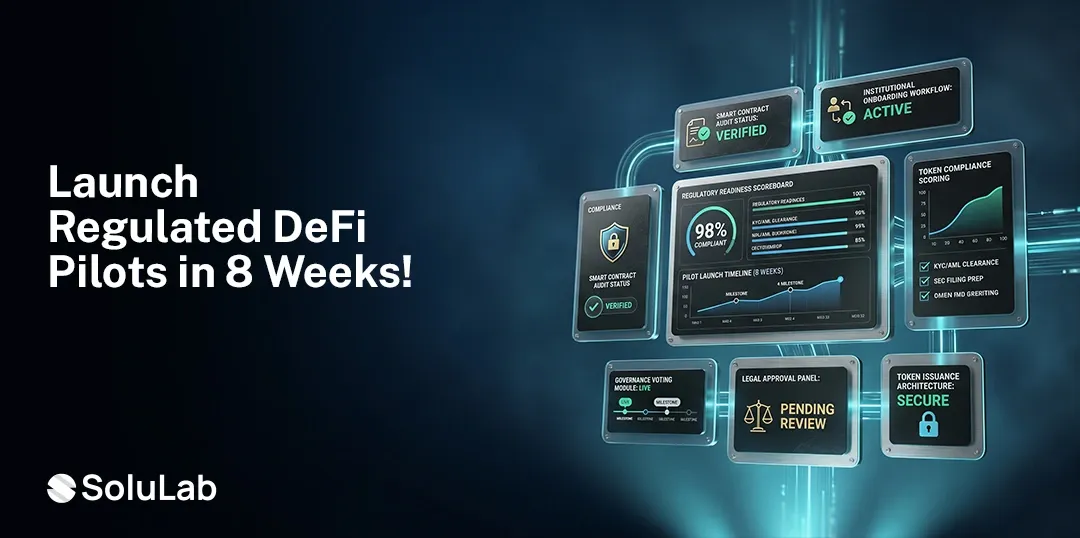
A practical blueprint for launching a compliance-ready institutional DeFi pilot in 6–8 weeks. Architecture, and cost explained. Book a call!