Every business is hunting for the next edge, and the tech market keeps moving the finish line. Over the last few years, blockchain and decentralized apps have handed companies a new set of tools: a way to modernise old processes, tighten security, and open revenue lines that did not exist before.
This post looks at what blockchain actually does for dApp development. We will start with the principles blockchain rests on, move to the traits that make dApps different from ordinary software, and then look at how the two depend on each other. The short version? Blockchain is what lets dApp developers build applications that are secure, transparent, and very hard to tamper with. And applications like that can change how whole industries work.
What is dApps in Blockchain?
Decentralized Applications, or dApps, are where the idea of decentralization turns into working software. A normal app lives on a company’s servers. A dApp does not. It runs on a blockchain network instead, which means nobody has to trust a middleman, the rules are visible, and the work is spread across many machines rather than one.
Core Characteristics of dApps
- Decentralization
Start here, because everything else follows from it. A dApp runs on a peer-to-peer network of computers, with no central authority or intermediary in charge. Take away the single point of failure and security improves. Take away the gatekeeper and the whole system becomes more open and more democratic.
- Open Source Code
The code is public. Anyone can read the logic and see exactly what the app does. That openness pulls the community into development, and it gives users something rare: the ability to check an application’s integrity for themselves instead of taking a vendor’s word for it.
- Blockchain Integration
No blockchain, no dApp. The chain acts as a ledger that resists tampering and cannot be rewritten, and it records every transaction and action inside the app. Security goes up. So does user trust, and by a lot.
- Tokenization
Most dApps move value around using blockchain-based tokens. A token might stand for an asset, or it might give access to a feature, and projects often hand them out to reward users and developers. Who creates and manages these tokens? Smart contracts: small programs on the chain that run themselves once their conditions are met.
How dApps Differ from Traditional Applications?
- Elimination of Intermediaries
Traditional apps route transactions and data through central servers and the companies that run them. dApps skip that. Users deal with each other directly over a peer-to-peer network, and once the middlemen are gone, costs fall and things move faster.
- Immutable Record Keeping
Everything that happens in a dApp gets written to the blockchain, openly and permanently. That makes people accountable. It also leaves a history of every interaction that anyone can verify later.
- Enhanced Security
Decentralization and the blockchain together give dApps a strong security model. Because the network is spread out, there is no single machine whose failure, or whose compromise, brings everything down. Users can feel far more confident that their data and assets are safe.
Synopsis of Business Prospects with Blockchain DApp Development Company
Blockchain was first designed as plumbing for cryptocurrencies. That is not where it stayed. Today it is a general-purpose tool used across many other sectors, and decentralized apps sit right in the middle of that change. Because they run on a decentralized network, businesses that adopt dApps in blockchain get real gains in efficiency, security, and transparency.
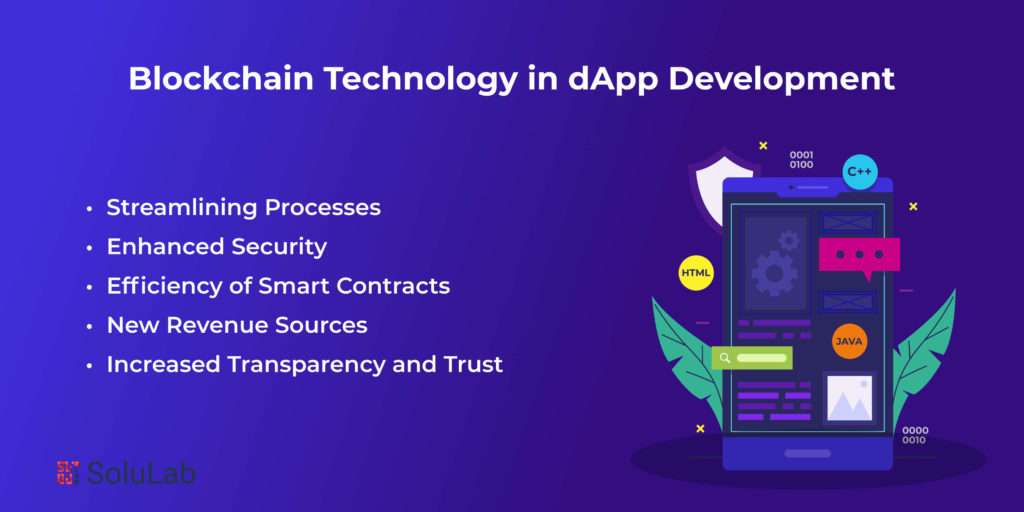
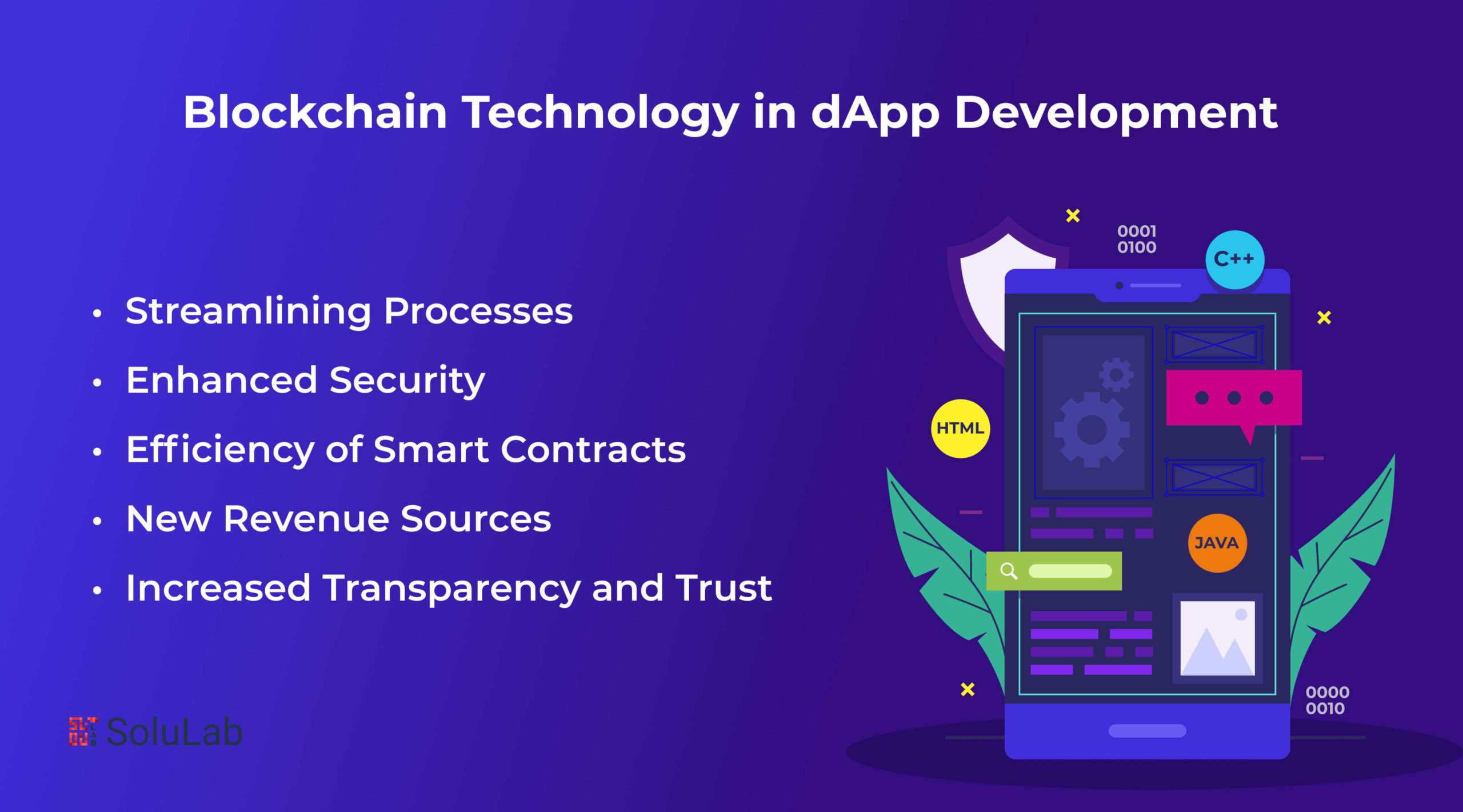
- Streamlining Processes: One of the clearest business cases for blockchain-based DApps is simpler, leaner processes. All sorts of workflows can be improved and automated, and with no middlemen in the loop there are fewer hand-offs and fewer mistakes.
- Enhanced Security: Data breaches and cyber threats keep rising, and security has climbed to the top of most leadership agendas. Blockchain’s decentralized design stores data in a tamper-resistant way, so unauthorised access and manipulation become much less likely.
- Efficiency of Smart Contracts: A smart contract is a program with the agreement’s terms written straight into its code, and it runs itself. That takes the middlemen out of contract handling. For companies, the result is faster transactions and lower costs.
- New Revenue Sources: Decentralized application development can open new income streams, most obviously through issuing tokens or running decentralized marketplaces. Both offer fresh ways to make money and grow the business.
- Increased Transparency and Trust: Good business relationships run on trust. Blockchain-based DApps keep a transparent ledger that nobody can quietly edit, which gives users and stakeholders a reason to believe the numbers. More openness can mean a stronger brand and more loyal customers.
Benefits of Blockchain in dApp Development
Ethereum DApp development is shaping where decentralized apps go next. Why are blockchain-based DApps catching on? A handful of reasons:
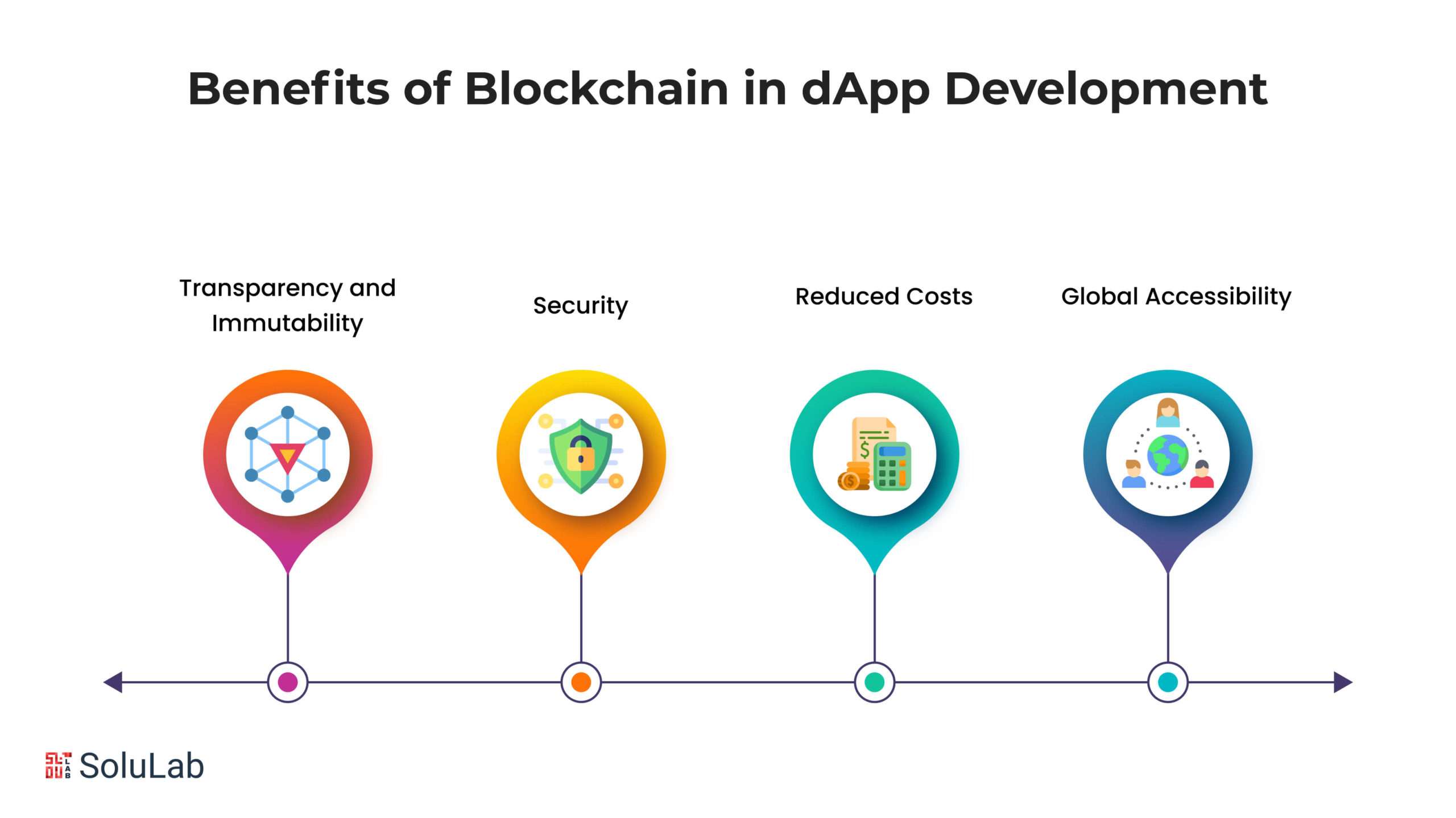
- Transparency and Immutability: Each transaction on a blockchain is recorded in public. Once data is written, it can’t be changed or pulled back, and that permanence is exactly what builds security and trust.
- Security: Being decentralized makes DApps a hard target for fraudsters and hackers. There is no single place for a bad actor to aim at.
- Reduced Costs: Cut out the middlemen, let smart contracts automate the routine work, and running costs can drop sharply.
- Global Accessibility: If you have an internet connection, you can use them. Financial systems and services become reachable from anywhere.
The Business Power of Decentralization
Fall behind on a technology shift and competitors will not wait for you. Decentralization is one of those shifts. It is changing how businesses will run, and blockchain-based DApps are where that change is most visible. Below, we look at how companies can profit from it: the growth it opens up, and what building blockchain applications does for day-to-day operations.
Opening Up New Growth Paths
For an organisation that wants to grow and diversify, working with the right blockchain DApp development firm on decentralized solutions is no longer optional. It is strategy. Decentralization opens doors that conventional, centralised systems kept shut.
- International Market Access: Going global gets easier with decentralized application development. A blockchain DApp development company can help you build efficient, secure, cross-border systems, and that gives you the confidence to walk into markets you have never tested.
- Tokenization for Capital Generation: Tokenization lets a business turn assets into tokens. That improves liquidity and opens up newer ways to raise money. A DApp development firm that specialises here can build tokenization straight into your blockchain application, so you can try different forms of financing.
- Community Involvement and Loyalty: Loyal customers keep a company alive over the long haul. DApps in blockchain give people a real stake through features like token-based rewards and decentralized governance. Users who feel like participants turn into advocates, and that is the ground long-term growth is built on.
How DApps on Blockchain Can Change Businesses Operations?
Blockchain DApps have shaken up long-standing corporate processes and made operations noticeably more efficient. Serious blockchain DApp development firms know just how much decentralized apps can change the way a business runs.
- Decentralized Data Management: Businesses sit on huge volumes of sensitive data. Blockchain DApps offer a decentralized way to manage it: data is stored safely, easy to audit, and resistant to manipulation. Security improves, and compliance gets simpler at the same time.
- Smart Contracts for Smooth Transactions: Build smart contracts into your operations and transactions speed up and run on their own. A blockchain DApp development company designs those contracts around your specific business needs, so transactions become quicker, more reliable, and cheaper.
- Supply Chain Transparency: Across sector after sector, companies are waking up to what an open supply chain is worth. With the know-how of a blockchain DApp development company, a business can use decentralized tools to see its whole supply chain end to end, and everyone with a stake in it gets more confidence as a result.
Innovations in Technology Creating Business Opportunities
Blockchain DApp development moves fast, and so does the business built around it. Staying ahead is the only way to keep winning. Every technical advance in this space tends to create a new commercial opening too.
- Blockchain Integration: For a strong blockchain DApp development business, clean blockchain integration is the foundation of everything. It is what makes transparent, safe, decentralized networks possible. The company’s real skill lies in getting the most out of the technology, which gives clients a solid platform to grow on.
- Decentralized Storage Solutions: Data has to be both safe and reachable. Knowing that, a blockchain DApp development business builds modern decentralized storage into its DApps. Data integrity is protected, and companies also get storage that scales well.
- Interoperability: Systems today are all connected, so interoperability is not a nice-to-have. A blockchain DApp development business puts compatibility with existing platforms and systems first. The result is a unified IT setup where a company gets blockchain’s benefits without disruption.
- Consensus Mechanisms: Pick the wrong consensus mechanism and the network suffers in reliability and efficiency. An advanced mechanism gets assessed and implemented by a blockchain in DApp development, tuned to what each DApp actually needs. That deliberate choice makes blockchain systems sturdier and more useful overall.
DApps for Banking and Finance
Finance is being rewired by blockchain DApps. The standout example is decentralized finance (DeFi).
DeFi DApps cover lending, borrowing, trading, and yield farming, with no traditional bank or intermediary involved. Users deal directly with DeFi protocols, all of which are run by smart contracts.
Then there are stablecoins. Smart-contract-governed coins like USDC and DAI, built on blockchain, have made the market steadier and more dependable. That could lead to a fairer, more efficient financial system, especially in places where a traditional bank is hard to reach.
DApps for Healthcare
Healthcare could gain a lot too. Blockchain can hold electronic health records (EHRs) in a form that is secure, interoperable, and unchangeable. Patients stay in control of their own health data and decide who sees it, whether that is a doctor, a researcher, or an insurer. Privacy improves. Trust follows.
DApps can also make the supply chain for drugs and medical equipment run better. When the data is transparent and fixed, it becomes possible to confirm that prescriptions are genuine and of the right quality, and to keep counterfeits off the shelf. In the end, patients are safer.
DApps for Supply Chain Management
Blockchain DApps, apps built on a distributed ledger, give supply chain managers strong traceability and transparency. With one shared ledger, every participant can follow an item in real time, from the factory floor to the customer’s door.
That matters most in food and luxury goods. Both live or die on authenticity and quality.
Counterfeit goods cost businesses billions every year [SOURCE NEEDED], and that bill could shrink considerably. A customer scans the product’s QR code, confirms it is genuine, and buys with a lot more peace of mind.
Challenges and Limitations of DApps in Blockchain 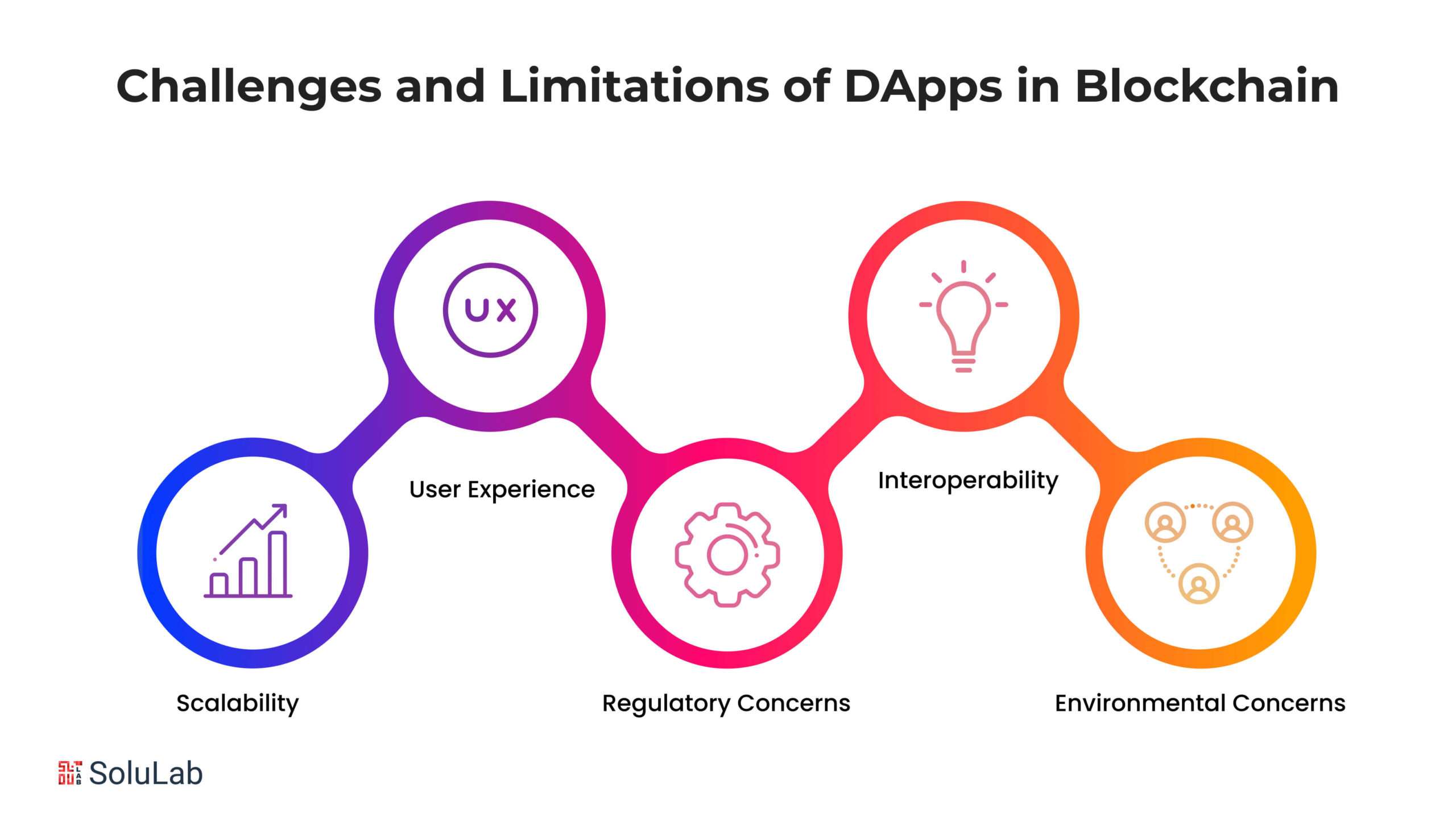
None of this comes free. DApps have real drawbacks, and it is better to know them up front.
- Scalability: Some networks, Ethereum among them, struggle to scale. The symptoms are high gas fees and slow transaction times.
- User Experience: DApps can be complicated to use, and that holds back mass adoption. Interfaces are getting better, steadily, but they are not there yet.
- Regulatory Concerns: Some DApps sit in a legal grey area. That makes compliance genuinely hard.
- Interoperability: Different blockchain networks don’t connect to each other easily, so assets and data can’t always flow where they need to.
- Environmental Concerns: Proof-of-work blockchains such as Bitcoin, and Ethereum before its move to proof-of-stake, use a great deal of energy. Moving to greener consensus approaches is essential.
The Development of DApps in the Future
Even so, the outlook for DApp development is very good. Hire Dapp Developers who are set on clearing today’s obstacles and making DApps easier to use and easier to reach.
Here are the developments and trends worth watching:
- Layer 2 Solutions: These exist to cut transaction costs and deal with scaling limits. Sidechains and Ethereum’s Optimistic Rollups are two examples.
- Cross-Chain Compatibility: Developers are working on better interoperability so assets and data can move smoothly between different blockchain networks.
- Non-Fungible Tokens, or NFTs: As NFTs catch on, artists, collectors, and producers get more options. DApps are a core part of how the NFT market works.
- Decentralized Identity: DApps could be central to decentralized identity, because they put users in charge of their own data.
- Governance and DAOs: Decentralized Autonomous Organizations (DAOs) are becoming a popular way to run community-led governance, across many DApps and organisations.
How to Pick a Trusted Blockchain App Development Company?
Choosing the best blockchain DApp development company means sidestepping the usual mistakes and weighing a few things carefully. In practice, this is where many projects are won or lost before a line of code is written:
- Experience and Expertise: Look for firms that clearly understand DApp development and have built blockchain systems before. Go through their portfolio and find the technologies and projects that match what you need.
- Technical Proficiency: Make sure they know the blockchain platforms and tools you are interested in. Test their grasp of consensus methods, smart contract development, and the other core building blocks.
- Historical Projects and Case Studies: Read their past projects and case studies. Judge the quality of the work, whether they delivered on time, and how happy the clients were. You will learn a lot about how dependable and capable they really are.
- Team Competency: Look hard at the team’s skills and history. A good DApp needs a capable, experienced crew behind it. You want people who know decentralized technology, blockchain, and the relevant programming languages.
- Scalability: Can the company grow your DApp as your business grows? More users and more data are coming, and the DApp has to be ready for them.
- Security Measures: Security is non-negotiable in blockchain work. Check that the firm follows security best practices, tests thoroughly, runs security audits, and builds in protections that keep your DApp safe from attacks and weak spots.
- Budget and Cost: Price matters, but value matters more than the lowest quote. Understand how they charge and make sure it fits your budget. A clear, open pricing plan is the best protection against surprise costs.
- Client References and Reviews: Ask for references and reviews from past clients. They will tell you about the firm’s reputation, how well it communicates, and how satisfied its clients tend to be.
- Support and Maintenance: Ask what support and maintenance they offer once development ends. A good firm sticks around, fixing problems and keeping your DApp up to date as the technology moves on.
Concluding Thoughts
Blockchain DApps are opening real opportunities. They bring lower costs, better security, and more transparency to a range of businesses. Challenges remain, sure. But as layer 2 solutions, interoperability, and friendlier interfaces keep improving, expect DApps to show up in far more places.
As they get more popular and more capable, DApps could overhaul how things are done today and give people, businesses, and industries a future that is more open, more efficient, and more inclusive. Blockchain supplies the foundation. DApp developers supply the imagination. Put the two together and the direction is clear: decentralized, and worth getting excited about.
If you are choosing a blockchain DApp development company, choose SoluLab. Our team has a proven record of building advanced decentralized apps. We put security, scalability, and regulatory compliance first, because that is what makes a DApp reliable. Transparent pricing, a customer-first way of working, and outstanding client testimonials back that up. SoluLab is more than a development service; it is a dApp development company, a partner that will bring your blockchain idea to life with skill and imagination. Want a smooth, productive DApp build with ongoing support and maintenance built in? hire blockchain developers from SoluLab today! Contact us now!
FAQs
Shipra Garg is a tech-focused content strategist and copywriter specializing in Web3, blockchain, and artificial intelligence. She has worked with startups and enterprise teams to craft high-conversion content that bridges deep tech with business impact. Her work translates complex innovations into clear, credible, and engaging narratives that drive growth and build trust in emerging tech markets.